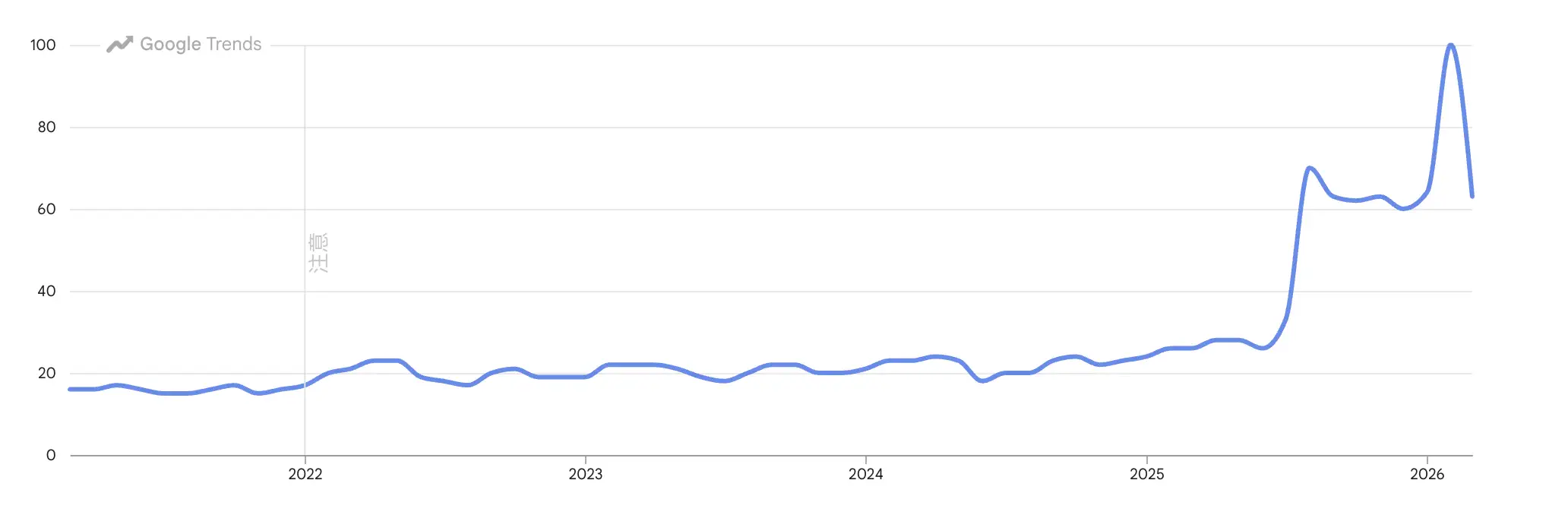
If you've started seeing "color walk" everywhere lately, you're not imagining it. Search interest stayed fairly quiet for years, then rose sharply in 2025 and peaked again in early 2026. So what changed?
The short version: a color walk is a simple walking exercise where you pick one color and look for it as you move through your surroundings. It feels playful, it fits neatly into wellness culture, and it turns an ordinary walk into something people can film, post, and repeat. But the idea itself is older than the current trend.
What is the color walk trend?
A color walk asks you to choose one color—yellow, blue, red, anything—and notice that color as you walk. That's it. You're not chasing a pace goal or trying to optimize your workout. You're giving your attention one job.
That simple rule explains a lot of the trend's appeal. It makes walking feel lighter. It also gives social platforms a clean visual hook: one color, one walk, one short story. In practice, the trend sits somewhere between a mindful walk, a mini scavenger hunt, and a very online wellness ritual.
That's also why it's easy to misunderstand. The trend is not the same thing as a full meditation method, and it doesn't need to be framed as a cure-all. It's better to think of it as a low-pressure attention practice that happens to be very shareable.
The idea is older than the trend
Here's the part most quick explainers skip: color walk may be newly viral, but it's not newly invented. A 2011 Stanford Arcade piece traces "color walking" through Munro Galloway and the writer William S. Burroughs, showing that versions of the idea existed well before TikTok.
That doesn't mean there's one clean founder story for the modern trend. There isn't. What it does mean is that today's color walk content belongs to a much older tradition of attention-based walking—looking more carefully, noticing pattern, and turning a walk into an exercise in perception.
So when people ask, "Who started color walk?" the safest answer is this: the current trend was popularized online, but the underlying idea has deeper roots. That's a more accurate story than pretending the whole thing appeared out of nowhere in 2025.
A 2021–2026 timeline of how color walk spread
The earliest sign of the current social version seems to show up around 2021. In a June 2021 post, Tonje Lilleås wrote that color walks were already being discussed as a TikTok trend. That's not proof of mass mainstream adoption, but it is a useful marker: the idea was circulating online years before most people heard about it.
From 2022 through 2023, interest appears to have stayed fairly niche. The Google Trends chart for the past five years shows a low but steady baseline during that period, which usually means an idea is circulating in pockets rather than breaking through everywhere at once.
By late 2024, that started to change. A December 2024 Well+Good piece is one clear sign that wellness media was starting to treat color walk as a recognizable social media trend, which is often what happens right before a niche habit turns into broader editorial coverage.
Then 2025 brought the real expansion. Bustle, Tom's Guide, and A Healthier Michigan all published explainers that framed color walk as a current wellness trend. Once that kind of coverage starts stacking up, the audience changes. It stops being mostly "people already inside the conversation" and starts becoming "people who just heard about it and want the backstory."
By early 2026, the search spike suggests exactly that broader discovery phase. Not just practitioners. Newcomers.
Why the trend took off now
Part of the answer is timing. Wellness culture has been moving toward smaller, lower-pressure habits for a while. People still want routines that help them slow down, but many are tired of advice that turns every walk into a performance metric.
Color walk fits that mood almost perfectly. It gives you structure without pressure. There's no special gear, no learning curve, and no need to act like your life changed after one afternoon walk. You just pick a color and go.
The broader rise of walking also helped. In its 2025 Year in Sport report, Strava said walking was the second-most recorded activity on the platform in 2025. That matters because trends rarely grow in isolation. A specific walking ritual spreads faster when walking itself is already having a moment.
And then there's the internet factor. Social platforms love habits that are easy to explain in one sentence and easy to show in one clip. Color walk has both. It's visual, repeatable, and flexible enough that almost anyone can try it without feeling like they're doing it wrong.
Is it just TikTok hype or something more?
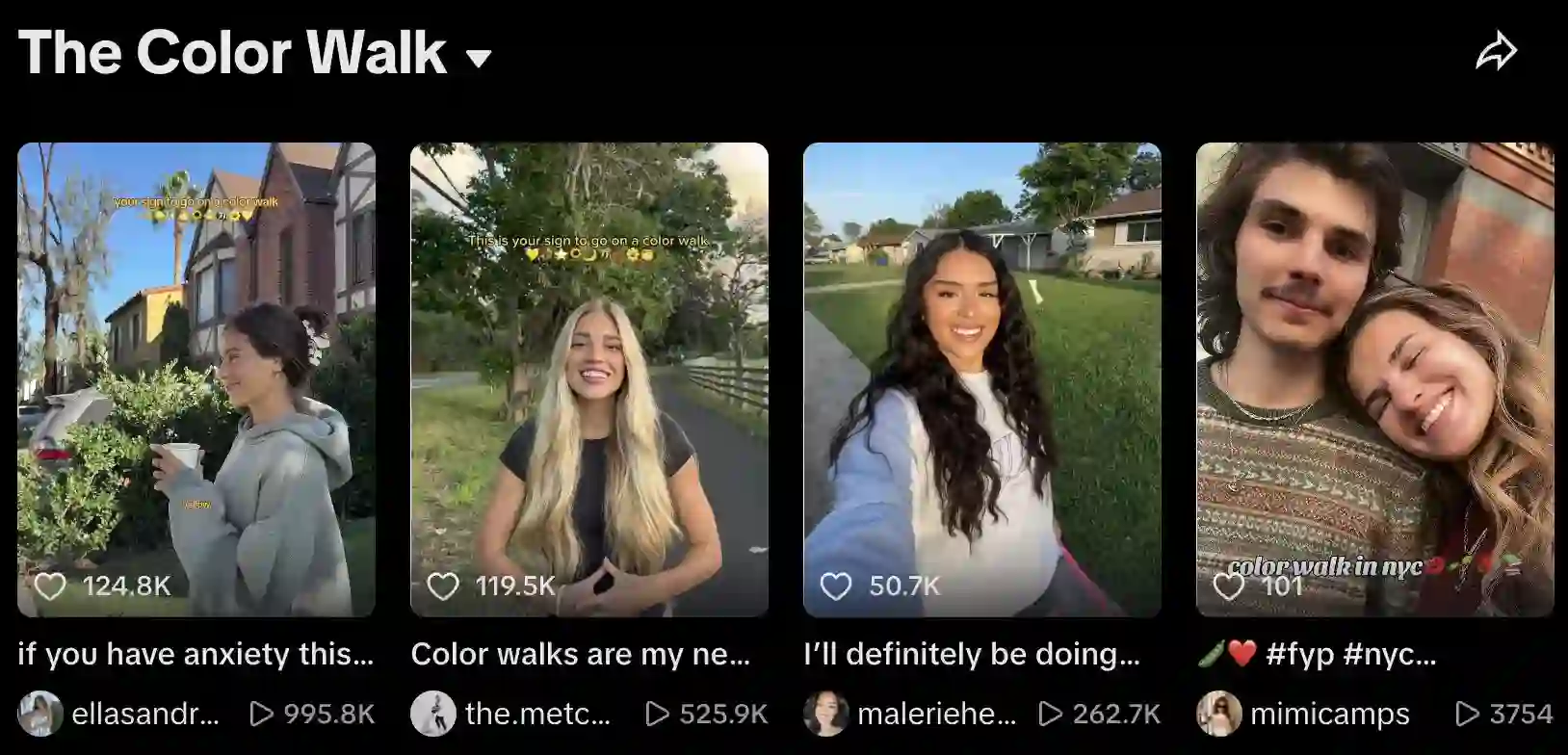
TikTok clearly helped the trend travel faster. That's hard to deny. But reducing color walk to "just social media hype" misses why people kept doing it after the novelty wore off.
The practice gives people a simple way to redirect attention. That matters. Not because it proves some huge medical claim, but because it makes a walk feel more absorbing and less scattered. For a lot of people, that's enough.
Still, it's worth keeping the claims in proportion. There is broader research around mindfulness, attention, and walking, but "color walk" as a specific named intervention is not backed by a large standalone evidence base. So the most credible way to talk about it is modestly: it may help some people feel more present, and its popularity makes sense culturally, but it shouldn't be sold as a miracle fix.
That's part of what makes the trend interesting, honestly. It's not promising a life overhaul. It's promising a different way to notice your surroundings for ten or twenty minutes.
Where to go next if you want to try it
This article is about the trend itself, not a full how-to. If you want the practical version, start with this guide on how to start a color walk.
If you want a broader feel for the idea behind the practice, you can also explore TheColorWalk.
If you're more interested in why people find the habit useful, this breakdown of the benefits of a color walk is the better next read.
The nice thing is that you don't need much context to try it. But if you wanted the backstory first, now you've got it.
The bottom line: color walk feels new because it's newly visible. The idea itself is older. What changed is the mix of timing, walking culture, wellness media, and social platforms that finally pushed it into mainstream view.
FAQ
Why is it called a color walk?
Because the color is the anchor. Instead of walking with no prompt, you choose one color and let that choice guide what you notice. The name is simple, but that's also why it works: it tells you exactly what to do without making the practice feel technical or intimidating.
Do you have to pick the same color every time?
Not at all. Most people switch colors depending on mood, season, or setting. One day you might look for yellow because it feels bright and playful; another day you might choose green in a park or blue in a city street. The point isn't consistency. It's giving your attention a clear focus for that particular walk.
Is a color walk more about mindfulness or creativity?
Usually both, just in different proportions. For some people, it feels like a calming attention exercise. For others, it feels more like a creative prompt that makes familiar streets look new again. That's part of the reason the trend travels so well online: it's flexible enough to mean slightly different things to different people.